
900.jpg?fit=crop&w=900&auto=format&q=40 "Refresh - Aesthetics & Wellness providers standing beside a Candela GentleMax Pro Plus laser hair removal device in a Florida treatment room")
Why Does Skin Start Looking Crepey? What Causes Thin, Wrinkled-Looking Skin in Vero Beach
Share this page:
October 28, 2026 by JFeinberg | Health + Beauty
-600.jpg?fit=crop&w=600&auto=format&q=40)
Crepey skin gets its name from its thin, finely wrinkled appearance that can resemble crepe paper. It commonly appears on the neck, face, upper arms, and other areas where skin gradually loses firmness and elasticity.
For patients in Vero Beach, cumulative Florida sun exposure can also contribute to these changes. But dryness, true skin laxity, and sun-damaged texture are not the same problem—which means they may not require the same treatment.
Why Does Skin Become Crepey With Age?
Collagen and elastin are important structural components of the skin. Collagen provides strength and support, while elastic fibers help skin return toward its original shape after stretching or movement.
As skin ages, collagen quantity and organization change, elastic fibers become less effective, and the skin can become thinner and drier. These changes can contribute to fine wrinkles, reduced resilience, and a looser or more fragile appearance.
This process happens gradually and is influenced by genetics, age, health, and environmental exposure.
How Does Florida Sun Exposure Affect Crepey Skin?
Ultraviolet radiation can accelerate visible skin aging, a process known as photoaging.
Chronic UV exposure contributes to breakdown and disorganization of collagen and elastic tissue. Over time, sun-damaged skin may develop wrinkles, uneven pigmentation, roughness, laxity, and a less resilient texture.
That makes sun protection particularly important in Vero Beach, where outdoor exposure occurs throughout the year.
Daily broad-spectrum sunscreen, protective clothing, shade, and avoiding intentional tanning can help reduce additional UV damage. Cosmetic treatments may improve some existing signs of photoaging, but they do not eliminate the need for continued sun protection.
Is Crepey Skin Just Dehydrated Skin?
Not always.
Dehydrated or very dry skin can temporarily make fine lines and texture look more noticeable. When the outer skin barrier lacks enough moisture, the surface can appear rougher, duller, or more wrinkled.
Using an appropriate moisturizer may improve that dry appearance.
True skin laxity is different. If collagen, elastin, and other supporting structures have changed, applying moisturizer cannot physically tighten loose skin. Hydration may improve how the surface looks and feels, but it does not replace lost structural support.
That distinction helps explain why some people notice improvement after changing their skincare routine while others continue seeing loose or crepey skin despite using moisturizer consistently.
Why Does Crepey Skin Often Show Up on the Neck?
The neck is a common area for early skin-aging concerns because the skin is relatively thin and receives substantial cumulative sun exposure.
Repeated movement, age-related changes in collagen and elastin, and UV damage can all contribute to fine wrinkling and loss of firmness.
The upper arms can develop a similar crepey appearance as skin elasticity changes. On the face, the same underlying processes may show up as fine lines, texture changes, or a softer-looking jawline.
Where the concern appears can influence which treatment approach makes the most sense.
Can Sofwave Help With Crepey or Loose Skin?
At Refresh – Aesthetics & Wellness in Vero Beach, Sofwave® is one option for patients whose main concern is mild to moderate skin laxity.
Sofwave uses ultrasound energy delivered into the mid-dermis to create controlled heating and stimulate collagen remodeling. Refresh currently uses the treatment for concerns including neck firmness, jawline and under-chin laxity, fine lines, and loose skin on the upper arms.
Results develop gradually because the treatment relies on the body’s collagen-building response rather than physically removing excess skin.
Non-surgical tightening also has limitations. Significant loose or excess skin may not respond enough to an energy-based treatment to meet a patient’s goals.
When Does Laser Resurfacing Make More Sense?
Sometimes skin that looks “crepey” is actually showing a combination of fine lines, rough texture, pigmentation, and sun damage rather than primarily laxity.
In those cases, resurfacing may be more relevant.
Refresh in Vero Beach offers multiple resurfacing technologies, including Clear + Brilliant®, Fraxel Pro, CoolPeel®, and deeper CO2 resurfacing. These treatments vary considerably in intensity and downtime but can be considered for concerns such as rough texture, fine lines, sun damage, uneven pigmentation, and acne scarring.
CO2 resurfacing can also stimulate collagen and create some firming, so there can be overlap between tightening and resurfacing treatments.
How Do You Know What Your Skin Actually Needs?
Start by identifying what is creating the crepey appearance.
If the primary issue is mild laxity, a tightening treatment such as Sofwave may be considered. If rough texture, fine lines, pigmentation, or sun damage are more prominent, resurfacing may make more sense. If dryness is exaggerating the appearance, improving the skin barrier may be an important first step.
Many patients have more than one of these concerns at the same time.
Treatment choice depends on individual anatomy, skin type and tone, degree of laxity, sun damage, health history, current skincare products, previous procedures, and personal goals.
To determine what is contributing to thin or crepey-looking skin, schedule a consultation with Refresh – Aesthetics & Wellness in Vero Beach for an individualized skin evaluation.
TOPICS
- Real Estate (6)
- Education and Tutoring (1)
- Health + Beauty (17)
- Marketing (2)
- Medical (10)
- Not For Profit - Volunteer (1)
- Shops (2)
RECENT POSTS
Why Does Skin Start Looking Crepey? What Causes Thin, Wrinkled-Looking Skin in Vero Beach
Crepey skin can develop from aging, collagen and elastin changes, sun exposure, dryness, and skin laxity. Learn why it commonly appears on the face, neck, and arms and which treatment approaches may be considered in Vero Beach.
.jpg?fit=crop&w=900&auto=format&q=40 "Provider performing a microneedling treatment on a patient’s face at Refresh - Aesthetics & Wellness in Florida")
Can Microneedling Really Help Acne Scars? What It Can—and Can’t—Improve in Vero Beach
Microneedling can improve the appearance of certain acne scars, but scar type matters. Learn how collagen remodeling works, why results develop gradually, and when another treatment may be more appropriate in Vero Beach.

Pumpkin Peel Season in Vero Beach: What This Gentle Exfoliating Treatment Actually Does
Pumpkin season is not just for lattes. Learn how the Pumpkin Peel at Refresh in Vero Beach exfoliates dull skin, improves texture, and offers a gentler alternative to deeper chemical peels.
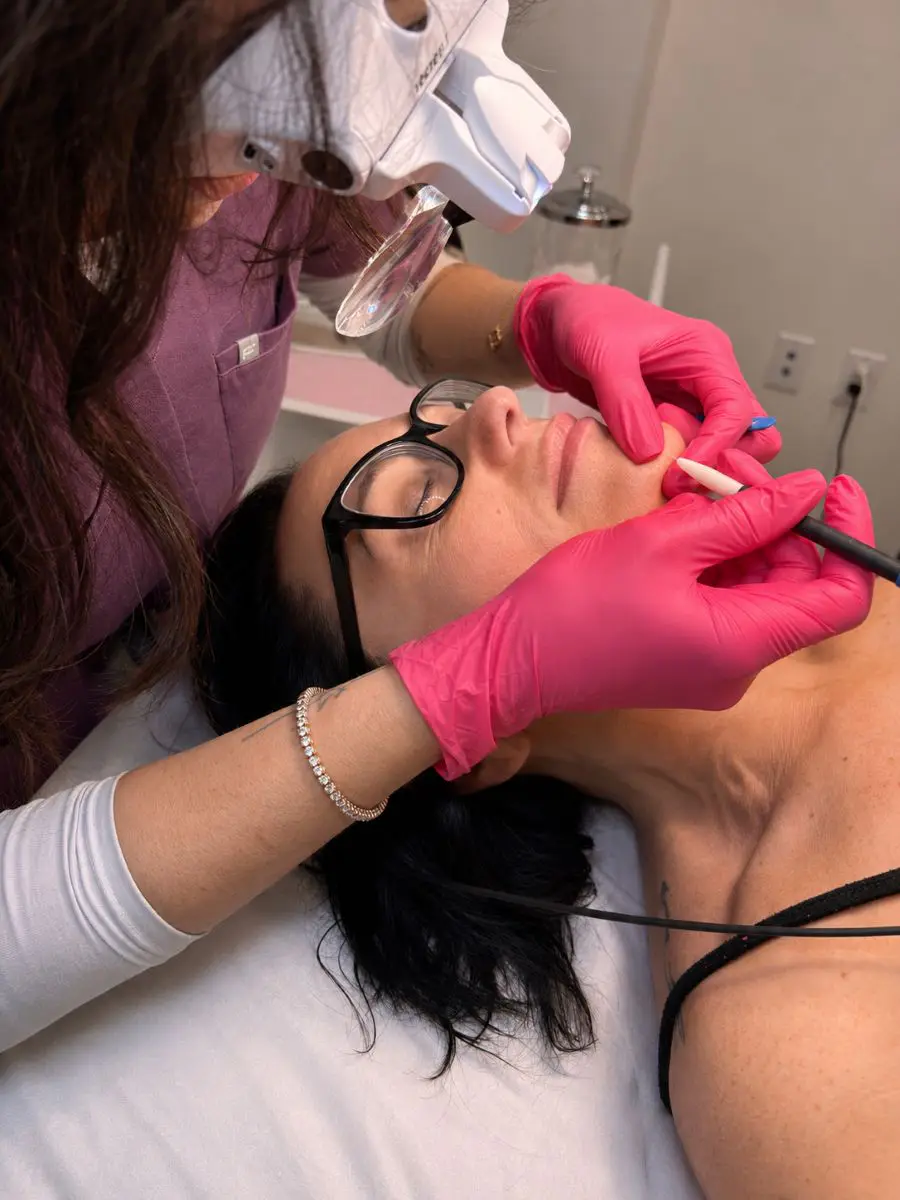
If Electrolysis Is Permanent, Why Does It Take So Many Sessions? What Vero Beach Patients Should Know
Electrolysis can permanently remove treated hair follicles, but complete clearance takes time because hair grows in different cycles. Learn why multiple appointments are normal and what Vero Beach patients should expect throughout the electrolysis process.
-900.jpg?fit=crop&w=900&auto=format&q=40 "Refresh - Aesthetics & Wellness medical director holding Kybella injectable treatment in a Florida med spa")
Can Kybella Get Rid of a Double Chin Without Surgery in Vero Beach?
A double chin can be caused by genetics, anatomy, or stubborn fat—even at a healthy weight. Learn how Kybella at Refresh Aesthetics & Wellness in Vero Beach works to permanently destroy treated fat cells beneath the chin without surgery.

Will Facial Balancing Make Me Look Overfilled? What Vero Beach Patients Should Know
Worried facial balancing will make you look overfilled? Learn how Refresh Aesthetics & Wellness in Vero Beach uses a conservative, personalized approach to improve facial proportions, structure, and symmetry while keeping results natural-looking.
