
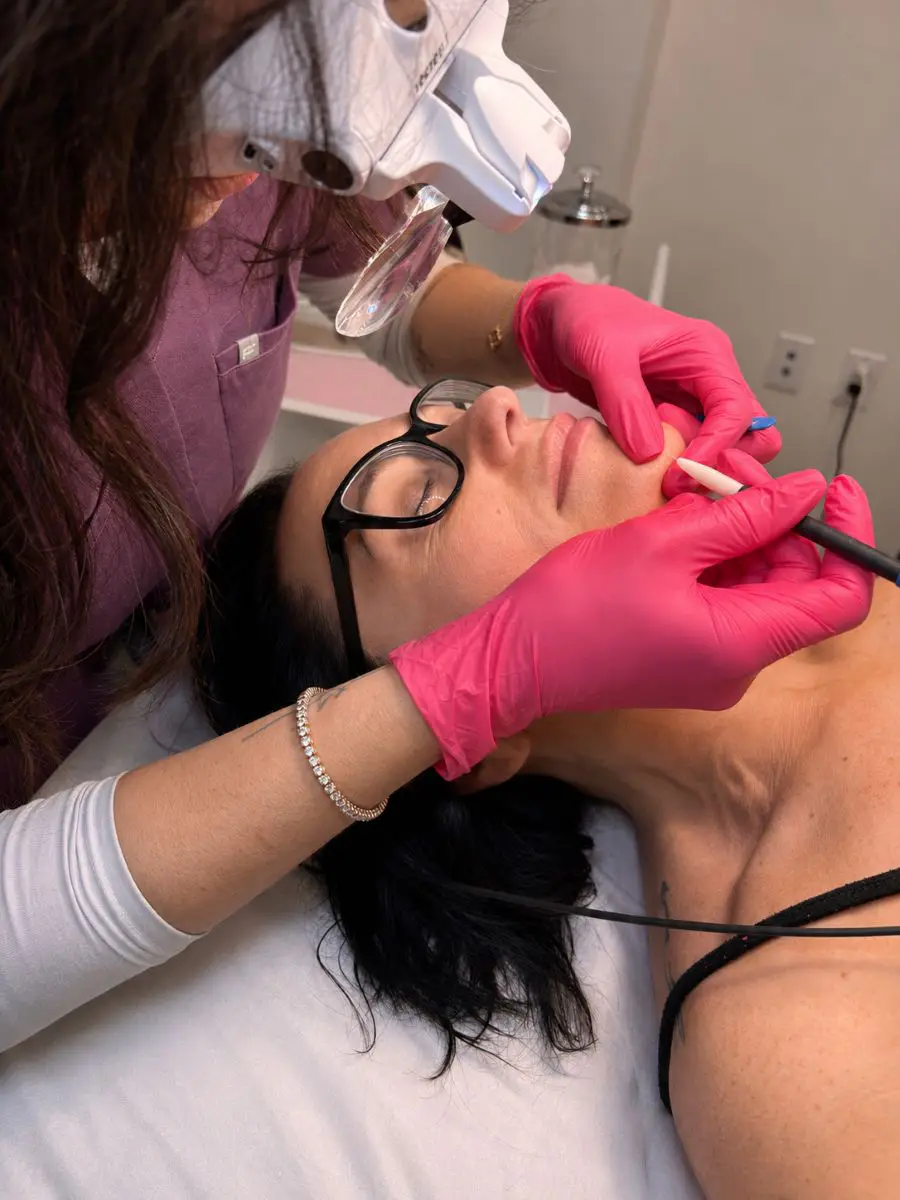
If Electrolysis Is Permanent, Why Does It Take So Many Sessions? What Vero Beach Patients Should Know
Share this page:
September 16, 2026 by JFeinberg | Health + Beauty

If Electrolysis Is Permanent, Why Does It Take So Many Sessions? What Vero Beach Patients Should Know
One of the most common questions patients ask about electrolysis is:
“If the hair removal is permanent, why do I have to keep coming back?”
It sounds contradictory at first, but the answer comes down to how human hair grows.
Electrolysis works by treating individual hair follicles, but not every follicle in a treatment area is actively producing visible hair at the same time. Hair continuously moves through different stages of growth, which means complete clearance requires repeated appointments as additional hairs become available to treat.
At Refresh - Aesthetics & Wellness in Vero Beach, electrolysis is available for patients looking for permanent hair removal, including those with blonde, gray, red, light, or stubborn hairs that may not respond well to laser hair removal.
Refresh's Vero Beach office is located in Ryanwood Square at 2170 58th Avenue, Vero Beach, FL 32966, serving patients throughout Vero Beach, Indian River County, Sebastian, Indian River Shores, Gifford, Fellsmere, Orchid Island, South Beach, Winter Beach, Fort Pierce, Port St. Lucie, Melbourne, Palm Bay, and surrounding Treasure Coast communities.
1. How Does Electrolysis Work?
Electrolysis treats hair one follicle at a time.
A very fine probe is inserted into the natural opening of the hair follicle. Controlled electrical energy is then delivered to the follicle to damage the structures responsible for future hair growth.
The treated hair is then gently removed.
The goal is to permanently disable the successfully treated follicle so it can no longer continue producing hair.
Unlike laser hair removal, electrolysis does not rely on pigment in the hair.
That makes it useful for hair colors including:
- Blonde
- Gray
- White
- Red
- Very light brown
- Individual stubborn hairs remaining after laser treatment
2. Why Can't Every Hair Be Removed in One Appointment?
Because your hairs are not all growing at the same time.
Each follicle moves through its own natural cycle.
Hair growth generally includes:
- An active growing phase
- A transitional phase
- A resting phase
- A shedding phase
At any given appointment, some follicles are actively producing visible hairs while others are resting underneath the skin.
Electrolysis can only treat hairs that are accessible during the appointment.
Several weeks later, completely different follicles may begin producing visible hair.
Those hairs were not necessarily “missed” during the previous treatment—they simply were not active yet.
3. Why Does the Growth Phase Matter?
Hair is most effectively treated when the follicle and growing hair are actively connected.
That is one reason consistent appointments matter, particularly early in the process.
Treating hairs as they enter their active growth phase gives the provider repeated opportunities to permanently disable follicles throughout the entire treatment area.
Over time, fewer untreated follicles remain.
That is when patients typically begin noticing that appointments involve less hair than they did at the beginning.
4. Does Hair Growing Back Mean Electrolysis Failed?
Not necessarily.
This is one of the biggest misunderstandings about electrolysis.
When hair appears again after treatment, it may be:
- A different follicle entering an active growth phase
- A hair that was previously beneath the surface
- A follicle influenced by hormones
- A follicle that needs additional treatment
An individual follicle may also require more than one treatment depending on factors such as hair depth, thickness, growth stage, and treatment history.
The important measurement is what happens across the entire area over time.
As treatment progresses, patients should generally see fewer hairs requiring treatment.
5. Why Are Appointments More Frequent at the Beginning?
When someone first starts electrolysis, there may be many visible hairs available to treat.
Early appointments may therefore be scheduled more frequently.
For example, a patient treating facial hair may initially need regular sessions because new hairs continue becoming visible from different follicles.
As more follicles are successfully treated, the number of hairs decreases.
Appointments may then become:
- Shorter
- Less frequent
- More focused on isolated remaining hairs
That gradual decrease is part of the normal clearance process.
6. How Long Does Electrolysis Take?
There is no universal timeline.
Someone treating a few isolated chin hairs will have a very different treatment schedule from someone seeking clearance across a larger area.
The overall timeline can depend on:
- Size of the treatment area
- Number of hairs
- Hair density
- Hair thickness
- Hair-growth cycles
- Hormonal influences
- Previous waxing or tweezing
- Consistency with appointments
- Individual response
Complete clearance is generally a process measured in months rather than days.
For larger or hormonally influenced areas, the process may extend longer.
7. Facial Hair vs. Body Hair: Is the Timeline Different?
It can be.
Facial hair is often influenced more heavily by hormonal activity than hair in some body areas.
Patients treating the:
- Chin
- Upper lip
- Jawline
- Neck
- Sideburn area
may continue seeing new hairs become active over time.
Body areas can also have longer growth cycles, meaning it may take more time before all follicles have passed through a treatable stage.
Treatment length should therefore be based on the specific area rather than promising every patient a fixed number of sessions.
8. How Do Hormones Affect Electrolysis?
Hormonal changes can stimulate new hair growth.
This is especially relevant for facial hair.
Factors that may influence hair patterns include:
- PCOS
- Menopause
- Pregnancy
- Certain medications
- Changes in androgen levels
- Other hormonal conditions
Electrolysis can permanently treat the follicle being targeted.
However, it cannot prevent hormones from activating different follicles that were not previously producing noticeable hair.
That is why some patients with hormonally driven facial hair may eventually need occasional maintenance for newly developing hairs.
9. What If I Have PCOS?
Patients with PCOS often experience persistent facial hair growth, particularly around the chin, jawline, and neck.
Electrolysis may be especially appealing because it can treat hairs regardless of color.
However, treating the existing hair does not eliminate the underlying hormonal influence.
New follicles may become active over time.
For patients with PCOS, electrolysis may still create significant long-term reduction and clearance, but the overall process may take longer and occasional future treatment may be necessary.
10. Does Previous Waxing or Tweezing Matter?
Yes.
Waxing and tweezing remove the hair from the follicle.
That means there may be nothing visible for the electrologist to treat until the hair grows again.
Repeated plucking can also make it harder to establish a predictable treatment schedule because hairs are continually being removed at different points in their growth cycles.
Patients beginning electrolysis are generally advised to stop waxing and tweezing the treatment area.
Trimming or shaving may sometimes be used between appointments depending on provider instructions because those methods do not pull the hair out from the root.
11. Why Is Electrolysis Different From Laser Hair Removal?
Laser hair removal and electrolysis both reduce unwanted hair, but they work differently.
Laser hair removal targets pigment in multiple hairs at once, making it particularly useful for larger areas with dark, coarse hair.
Electrolysis treats individual follicles and does not depend on hair pigment.
That makes electrolysis particularly useful for:
- Blonde hair
- Gray hair
- White hair
- Red hair
- Small facial areas
- Individual stubborn hairs
- Hairs that remain after laser treatment
For some patients, the two approaches may even be used at different stages of a broader hair-removal plan.
12. Why Is Laser Usually Faster for Large Areas?
Laser can deliver energy across multiple follicles during each pulse.
That makes it practical for larger areas such as:
- Legs
- Back
- Brazilian area
- Underarms
Electrolysis treats individual follicles.
That precision is one of its strengths, but it also means large, dense areas require more time.
This is why treatment selection should depend on the patient's hair color, density, treatment area, and goals.
13. Does Electrolysis Hurt?
Comfort varies from person to person.
Patients may describe the sensation as:
- Warmth
- A brief sting
- A small pinch
- Tingling
Certain areas of the face and body may feel more sensitive than others.
Treatment time can also be adjusted based on patient comfort.
Someone new to electrolysis may begin with shorter sessions before deciding whether longer appointments work well for them.
14. Is There Downtime?
Downtime is generally minimal.
Immediately afterward, patients may experience:
- Temporary redness
- Mild swelling around treated follicles
- Sensitivity
- Small pinpoint areas of irritation
These effects typically improve as the skin settles.
Patients should follow their provider's aftercare instructions and avoid unnecessary irritation to freshly treated skin.
For Vero Beach patients, sun protection is especially important because recently treated skin may be more sensitive to Florida's year-round UV exposure.
15. When Will I Notice a Difference?
Electrolysis progress is gradual.
At first, patients may feel like they are constantly seeing new hair.
That is because previously inactive follicles continue cycling into growth.
Over time, however, the pattern should change.
Patients may notice:
- Fewer visible hairs
- More space between hairs
- Shorter appointments
- Longer periods of clear skin
- Less frequent treatment
Progress is better measured over several months than after one or two sessions.
16. What Does “Permanent Hair Removal” Actually Mean?
Electrolysis is designed to permanently destroy successfully treated hair follicles.
That does not mean every visible hair disappears after one visit.
Permanent removal occurs follicle by follicle, over the course of multiple growth cycles.
Once a follicle has been successfully disabled, it should no longer continue producing that hair.
However, future hormonal changes can potentially activate other follicles that were not producing visible hair during the original treatment period.
Understanding that distinction helps set realistic expectations.
17. How Can I Make Electrolysis More Efficient?
Consistency matters.
Patients can help keep the process moving by:
- Keeping scheduled appointments
- Avoiding waxing and tweezing
- Following preparation instructions
- Allowing enough visible growth for treatment
- Following aftercare recommendations
- Informing the provider about hormonal or medication changes
Frequently interrupting treatment can make the overall timeline longer because hairs continue moving through growth cycles whether treatment is occurring or not.
18. How Do I Know When I'm Almost Finished?
Toward the end of a successful electrolysis series, patients typically notice that:
- Very few hairs remain
- Remaining hairs appear sporadically
- Appointments become shorter
- Visits become farther apart
- The treatment area stays clearer for longer periods
At that stage, treatment shifts from clearing a larger area to catching isolated remaining follicles as they become active.
Choosing Electrolysis Locally in Vero Beach
Refresh - Aesthetics & Wellness provides electrolysis for patients throughout Vero Beach, Indian River County, and surrounding Treasure Coast communities.
The Vero Beach office is conveniently located in:
Ryanwood Square
2170 58th Avenue
Vero Beach, FL 32966
Patients visit Refresh from Sebastian, Indian River Shores, Gifford, Fellsmere, Orchid Island, South Beach, Winter Beach, Fort Pierce, Port St. Lucie, Melbourne, Palm Bay, and surrounding communities.
Electrolysis may be particularly useful for patients with blonde, gray, white, red, or stubborn facial hair that is difficult to treat with traditional laser hair removal.
Refresh is trusted by 100,000 patients throughout Florida.
Patients interested in electrolysis in Vero Beach can call 772-213-9544 to schedule an evaluation.
The Vero Beach office is open Monday through Friday from 10:00 AM to 6:00 PM, with extended hours on Thursdays until 9:00 PM.
For patients asking, “If electrolysis is permanent, why do I need so many appointments?”, the answer is simple:
The treated follicle may be permanent. Getting access to every follicle requires time.
Hair grows in cycles, and complete clearance happens progressively as each new group of hairs becomes available to treat.
This article is for general educational purposes. Treatment schedules, appointment frequency, comfort, total treatment time, and results vary based on hair growth patterns, treatment area, hormones, previous hair-removal methods, and individual response.
TOPICS
- Real Estate (6)
- Education and Tutoring (1)
- Health + Beauty (15)
- Marketing (2)
- Medical (10)
- Not For Profit - Volunteer (1)
- Shops (2)
RECENT POSTS

Pumpkin Peel Season in Vero Beach: What This Gentle Exfoliating Treatment Actually Does
Pumpkin season is not just for lattes. Learn how the Pumpkin Peel at Refresh in Vero Beach exfoliates dull skin, improves texture, and offers a gentler alternative to deeper chemical peels.
If Electrolysis Is Permanent, Why Does It Take So Many Sessions? What Vero Beach Patients Should Know
Electrolysis can permanently remove treated hair follicles, but complete clearance takes time because hair grows in different cycles. Learn why multiple appointments are normal and what Vero Beach patients should expect throughout the electrolysis process.
-900.jpg?fit=crop&w=900&auto=format&q=40 "Refresh - Aesthetics & Wellness medical director holding Kybella injectable treatment in a Florida med spa")
Can Kybella Get Rid of a Double Chin Without Surgery in Vero Beach?
A double chin can be caused by genetics, anatomy, or stubborn fat—even at a healthy weight. Learn how Kybella at Refresh Aesthetics & Wellness in Vero Beach works to permanently destroy treated fat cells beneath the chin without surgery.

Will Facial Balancing Make Me Look Overfilled? What Vero Beach Patients Should Know
Worried facial balancing will make you look overfilled? Learn how Refresh Aesthetics & Wellness in Vero Beach uses a conservative, personalized approach to improve facial proportions, structure, and symmetry while keeping results natural-looking.
The 'Salmon Sperm Facial' Is Everywhere — What Vero Beach Patients Should Know About PDRN With Microneedling
The viral “salmon sperm facial” is actually PDRN, a regenerative skincare ingredient derived from purified fish DNA. Learn how PDRN can be paired with microneedling at Refresh Aesthetics & Wellness in Vero Beach for patients interested in hydration, texture, collagen support, and overall skin rejuvenation.

How Often Should I Get NAD+ Therapy in Vero Beach?
Wondering how often to get NAD+ Therapy in Vero Beach? Learn about NAD+ IV infusions, monthly IM injections, treatment frequency, appointment length, and personalized wellness planning at Refresh Aesthetics & Wellness in Ryanwood Square.
